
System and method for enabling the emergency remote override of a hijacked operation of a vehicle, a device or a facility
US Patent 11,679,894 covers a method for remotely reestablishing control of a device function after that control has been lost, at least partially, because of malicious interference by a third party. An auxiliary controller module built into the device talks to the operator’s base controller over a second communication mode that differs from the primary one. When the device stops responding on the primary channel, a predetermined code known only to the operator and the module activates the auxiliary module. The module disables the onboard primary controller and temporarily takes over the affected function. This patent is a continuation-in-part of our drone hijacking patent, US 11,092,957, and extends the approach to autonomous vehicles, watercraft and industrial plants.
More and more vehicles, vessels and industrial facilities can be reached remotely. Cars use telematics for tracking, remote start and remote shutdown. Autonomous vehicles depend on remote connectivity. Ships, whether autonomous or crewed, can be targeted by outside interference or piracy, and industrial plants face cyber attacks. Each of these connections can also be abused. If an attacker takes over the primary control channel, the rightful operator needs another secure way to regain control.
The device’s onboard primary controller runs one or more of its functions on instructions from the operator’s base controller, sent over a first communication mode such as RF or cellular.
An auxiliary controller module integrated into the device listens on a second, different communication mode. In the described embodiments it includes a GSM module, a GPS receiver, a communications transmitter/receiver, and its own processor and power supply.
The override is activated only by a predetermined code known to the operator and the module. For example, an SMS can carry an authentication code plus the specific code. The patent also describes multi-party authorization, where two or more parties (such as a ship owner and an insurer) each supply part of the code.
On receiving a valid code, the auxiliary module disables the onboard primary controller and temporarily takes over the affected function, so the authorized operator can send further instructions. Normal control can be restored when it is safe to do so.
The module can be integrated with autonomous or semi-autonomous vehicles to give the authorized operator a backup way to override a compromised control channel.
Applications include watercraft and conventional, non-autonomous ships. In the simplest implementation the patent describes, the module sits in-line with a power wire feeding the control center on the ship’s bridge. A more advanced version uses a coded message to trigger a master override that locks out the bridge controls while remote control continues.
In industrial plants, a coded message can disrupt a compromised function using a software switch, a hardware switch, or both.
The same approach applies to the drones covered by the parent patent, including potential defense uses of unmanned vehicles.
Connected vehicles can be targeted. In 2016 the FBI publicly warned that motor vehicles are increasingly vulnerable to remote exploits, and researchers have demonstrated remote attacks on vehicle systems. US 11,679,894 describes a code-protected backup channel that an authorized operator can use to override a hijacked autonomous or semi-autonomous vehicle.
Security researchers have demonstrated weaknesses in shipboard navigation and control systems, and ships also face traditional piracy. This patent covers integrating the override module with watercraft, including conventional ships, so an authorized party can step in through a separate coded channel.
A kill switch usually just stops a vehicle or machine. The patented system uses a separate, code-activated channel to disable the compromised primary controller and temporarily take over the affected function, which can include cutting power through a switch. Control can then be handed back.
US 11,679,894 is a continuation-in-part of US 11,092,957, which covers the same backup-controller approach for drones. It is itself the parent of US 12,037,132, which focuses on control systems such as industrial control systems.
Industries
Applications across critical industries
Designed to maintain secure and reliable communications when primary communication methods fail.
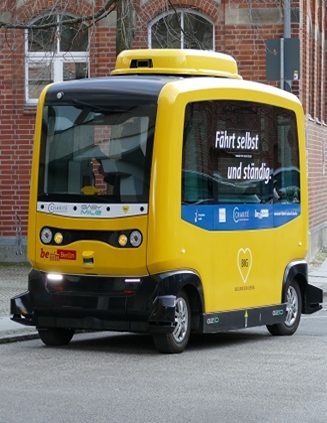 Autonomous Vehicles
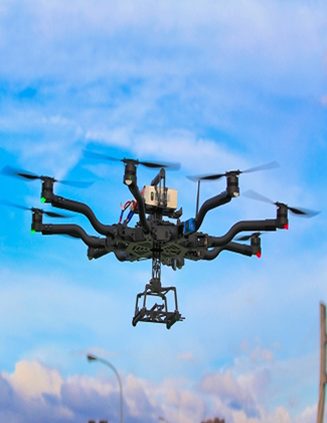 Drones
 Commercial Shipping
 Power Plants
To ask about licensing, leasing or buying US Patent 11,679,894 outright, contact us at info@stormfire.com.